-
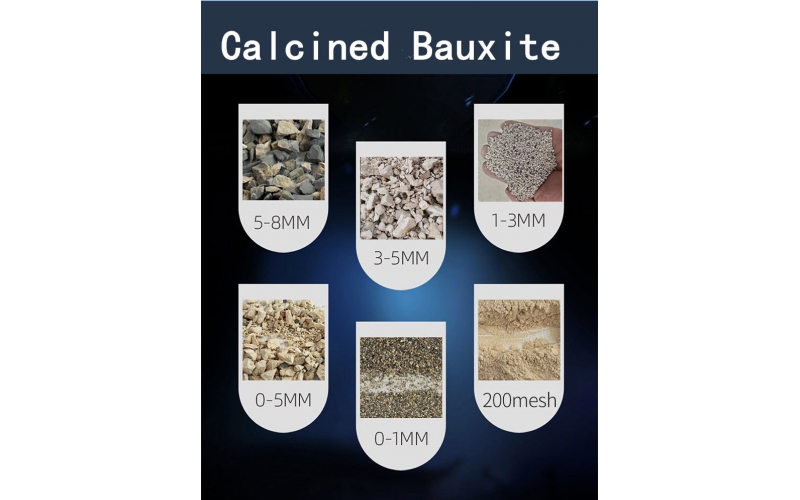
Industrial Applications of Bauxite
Industrial Applications of Bauxite1. Aluminum Smelting Industry (Largest Application, over 85% of total consumption)Production RouteBauxite → Metallurgical-grade alumina via Bayer or sinter process →
2026/06/11 admin 0
-
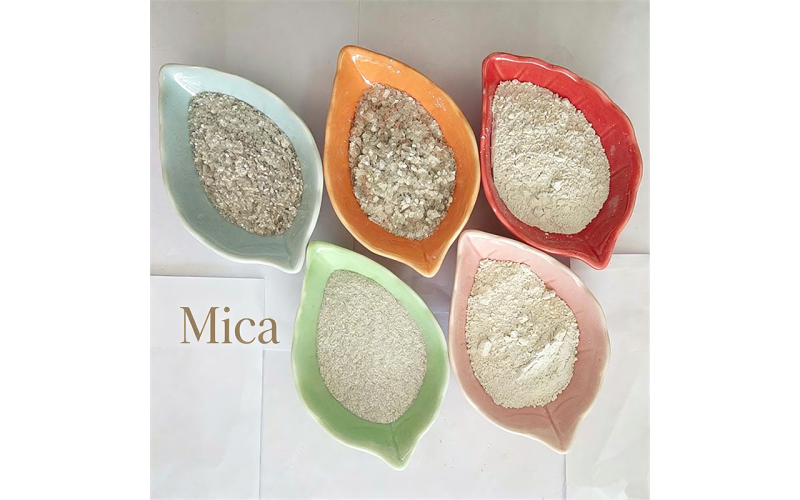
The core functions of mica powder are mainly reflected in the following fields
Mica Powder from Lingshou Wanzhu Mineral Products Co., Ltd.
Combined with universal industrial characteristics and the enterprise’s product parameters, its core applications are outlined as follows:
I. Core Industrial Applications — Leveraging Insulation, Elasticity and High-Temperature Resistance
Electrical and Electronics Industry
With outstanding electrical insulation and heat resistance, mica powder acts as a vital raw material for electrical equipment and electronic components:
Serves as an insulating filler for insulation protection of circuit boards and electronic parts, supporting miniaturization and high-performance operation of equipment.
Can be processed into mica paper, a cost-effective and uniformly thick insulating substitute for natural mica sheets, widely adopted in transformers, motors, capacitors and other facilities.
Plastics and Rubber Industry
Functions as a reinforcing agent to greatly boost material performance:
Plastics: Raises heat deflection temperature and Vicat softening point, ideal for high-temperature components such as auto engine peripheral parts.
Rubber: Improves air tightness and anti-aging capacity; its polarization effect shields UV rays to extend the service life of rubber goods.
Coatings and Anti-Corrosion Industry
Its two-dimensional flaky structure and chemical stability optimize coating properties:
Enhances coating impermeability, weather resistance and UV resistance. It is extensively used in exterior architectural paints, anti-corrosion coatings and high-temperature resistant coating systems to prolong coating lifespan.
II. Building Materials & Construction Sector — Utilizing Insulation and Weather Resistance
Advanced Building Materials
Applied in refractory and thermal insulation materials. Its insulating and heat-resistant properties facilitate energy-saving upgrades for buildings, and it works as an additive to strengthen the anti-aging performance of construction materials.
Architectural Coatings
When blended into architectural paints, it counteracts UV radiation to prevent wall discoloration and chalking, while boosting the mechanical strength and adhesion of coating films.
III. Other Potential Application Fields
Based on inherent mica powder properties, the company’s products can also be expanded into:
Ceramics: Acts as ceramic pigment to enhance product appearance, or for manufacturing heat-resistant insulating mica ceramics.
Welding Electrodes: Used as coating material to stabilize electric arcs, reduce spattering and optimize welding operability.
Cosmetics: Products meeting strict particle size and purity standards can serve as natural mineral raw materials for pressed powder, eye shadow and other makeup, delivering lustre and silky smooth texture (compliance with cosmetic raw material specifications is required).
IV. Core Advantages of the Enterprise’s Mica Powder
As verified by platform records, Lingshou Wanzhu Mineral Products Co., Ltd. offers competitive strengths:
Credible Qualifications: Certified platform supplier with verified business license, guaranteeing stable product quality.
Stable Supply Chain: Mature logistics system ensures punctual delivery.
Flexible Customized Service: Free sample provision for customers to conduct compatibility testing.2026/06/11 MetInfo 0
-
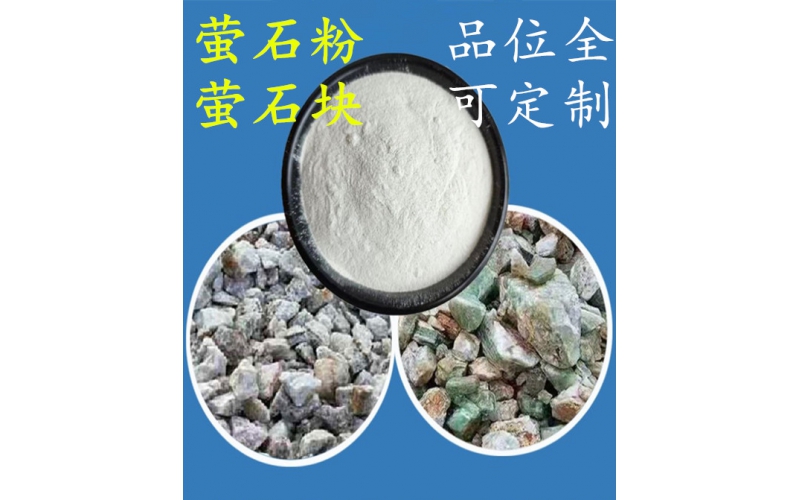
Complete Production Process of Fluorite Powder by Flotation Method
Complete Production Process of Fluorite Powder by Flotation Method
1. Process Principle
Fluorite is usually intergrown with quartz, calcite, barite, mica and clay. Flotation separation relies on the difference in hydrophilicity/hydrophobicity of mineral surfaces. Collectors are added to render fluorite particles hydrophobic so they can attach to air bubbles and float upward, while gangue impurities remain at the bottom of pulp for precise separation and purification. Low-grade raw ore can be upgraded to glass-grade fluorite powder with CaF₂ ≥95% and high-purity acid-grade fluorite powder with CaF₂ above 97%.
2. Complete Process Flow
(1) Crushing Section
Large lump fluorite raw ore is coarsely crushed by jaw crusher.
Secondary fine crushing is carried out via cone crusher or hammer crusher, followed by screening to control particle size and produce uniform ore grains of 10–25 mm.
Pre-screening removes massive clay crusts and waste rock host rock in advance to mitigate interference from argillization.
(2) Grinding and Liberation Section
Crushed ore is fed into a ball mill for wet grinding down to around 200 mesh.
Purpose: Fully liberate fluorite crystals from gangue such as quartz and calcite; only liberated monomer particles can be effectively separated.
Closed-circuit circulation with classifier: coarse particles are sent back for regrinding to maintain consistent and stable fineness.
(3) Pulp Conditioning and Reagent Addition (Key Step)
Pulp is transferred to mixing tanks, with reagents added stepwise to adjust flotation conditions:
Regulators (soda ash, sulfuric acid): control pH value and depress the flotation of calcite and quartz.
Depressants: suppress barite and silicate impurities to prevent them from floating together with fluorite.
Collectors (oleic acid series, fatty acid reagents): coat fluorite particle surfaces to endow fluorite with hydrophobic property.
Frothers: generate fine and stable air bubbles to carry floating fluorite particles.
Sufficient agitation ensures full reaction between reagents and mineral surfaces.
(4) Rough Flotation
Conditioned pulp is pumped into flotation cells; aeration and stirring generate abundant bubbles.
Hydrophobic fluorite adheres to bubbles and floats up to form a froth layer on the surface.
Bottom pulp containing large amounts of quartz, clay and waste gangue is discharged directly as tailings.
Froth from rough flotation is medium-to-high grade rough fluorite concentrate.
(5) Multi-stage Cleaning and Purification (Mandatory for Glass-Grade Powder)
Rough concentrate froth flows into 2 to 4 stages of cleaning flotation cells.
Reagent dosage is fine-tuned step by step to deeply strip fine entrained impurities of quartz and calcite.
After multiple cleaning cycles, CaF₂ purity stably reaches 95%–97%, with harmful impurities (iron, silicon, sulfur) reduced to ultra-low levels, meeting quality standards for glass and ceramics.
Minor middlings from the bottom of cleaning cells are recycled back to previous processes for recovery to boost overall recovery rate.
(6) Dewatering and Filter Pressing
High-grade fluorite froth concentrate is collected and sent to thickener tanks for sedimentation to remove most free water.
High-pressure filter press squeezes and dewaters the slurry; moisture content of filter cake is controlled at 8%–12%.
(7) Drying, Ultrafine Milling, Screening and Packaging
Filter cake is fed into drying kiln to lower moisture further.
Ultrafine pulverizer breaks up and grinds dried cake into fine powder.
Vibrating screen classifies powder into standard fineness grades (325 mesh, 400 mesh, etc.).
Iron removal and impurity elimination are conducted before bagging and warehousing as finished glass-specific fluorite powder.
3. Advantages of Flotation Process
Strong purification capacity: High-purity powder with CaF₂ over 95% can be produced even from low-grade raw ore.
Precise impurity control: Extremely low content of iron, silicon dioxide and sulfur, complying with strict requirements of float glass and ultra-clear glass.
Large production capacity, suitable for continuous mass industrial production.
Adjustable fineness: Custom powder sizes ranging from 200 mesh to 1250 mesh are available on demand.
4. Applicable Product Grades
Glass-grade fluorite powder: CaF₂ ≥95%, low iron and low silicon content
Acid-grade fluorite powder: CaF₂ ≥97%, used for hydrofluoric acid and chemical industry
Metallurgical-grade fluorite powder: Lower purity requirement, producible via simplified flotation flowsheet2026/06/11 MetInfo 0